


Choosing between a website redesign vs new website is a common challenge for Malaysian businesses. At some point, every business realises their website is no longer delivering results. It might feel outdated, load slowly, or simply fail to generate leads like it used to.
That’s when the big question comes up:
Should you improve your current website—or build a completely new one?
This decision goes beyond design. It affects your budget, timeline, SEO performance, and long-term business growth. Making the wrong choice can lead to wasted investment and ongoing issues, while the right decision can unlock better performance and stronger results.
Let’s break it down so you can decide with confidence.
Website Redesign vs New Website: Understanding the Two Approaches

When businesses update their websites, they usually take one of two paths.
1. Improving What You Already Have
This option focuses on enhancing your current website without replacing its core system.
The structure, backend, and content management system remain largely the same, while updates are made to design, usability, and performance.
2. Building a Brand-New Website
A complete rebuild involves starting from scratch.
Everything—from the system and structure to the design and functionality—is recreated. This approach gives you full control but requires more time and investment.
A Quick Way to Decide
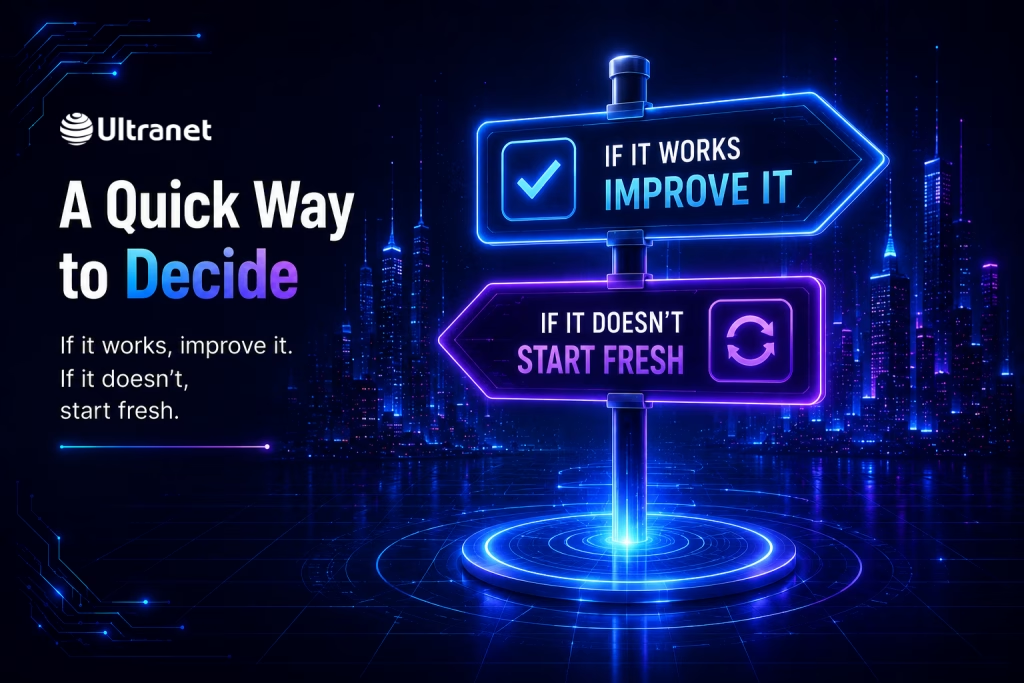
If your current website still works technically → improve it
If the system is outdated or unreliable → rebuild it
Simple—but the details matter.
Why This Decision Matters
Choosing between improving or rebuilding isn’t just a technical choice—it’s a strategic one.
Your decision will directly impact:
- How efficiently your budget is used
- How stable your search rankings remain
- How quickly your new site can go live
- How well your website converts visitors
- The level of technical risk involved
Making the wrong move can lead to unnecessary costs and continued performance issues—even after launching the updated site.
When Updating Your Existing Website Makes Sense
If your website’s foundation is still solid, upgrading it is often the smarter and more cost-effective option.
This approach works well when:
- Your system is stable and still supported
- Your website already ranks well on search engines
- Core features are functioning properly
- The design feels outdated
- Mobile experience needs improvement
- You’re working with a limited or moderate budget
What an Upgrade Usually Includes

Improving an existing site often involves:
- Refreshing the visual design and branding
- Reorganising content for clarity
- Improving navigation and user flow
- Enhancing mobile responsiveness
- Increasing loading speed
- Maintaining existing SEO performance
Signs You Don’t Need a Full Rebuild
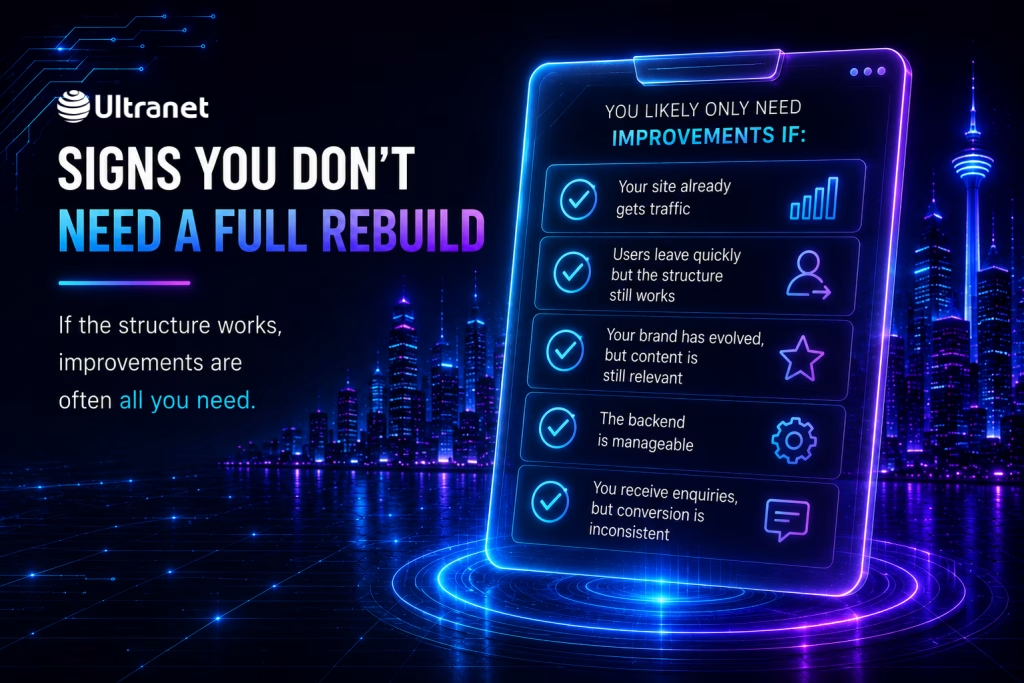
You likely only need improvements if:
- Your site already gets traffic
- Users leave quickly but the structure still works
- Your brand has evolved, but content is still relevant
- The backend is manageable
- You receive enquiries, but conversion is inconsistent
In these cases, the issue is usually user experience—not the system itself.
When It’s Time to Start Over
Sometimes, improving your current website simply isn’t enough.
If the system behind your site is outdated or unreliable, a full rebuild is often the better long-term solution.
When a Rebuild Is the Right Choice
Starting fresh is recommended if:
- Your website runs on outdated technology
- The backend is difficult or risky to manage
- Security concerns exist
- Mobile performance cannot be fixed properly
- Speed issues persist despite optimisation
- SEO structure is poorly set up
- Your business direction has significantly changed
Warning Signs You Shouldn’t Ignore

A rebuild is often unavoidable if:
- Your website frequently breaks during updates
- There is no developer support available
- Plugins or frameworks are outdated
- Technical errors keep occurring
- Your hosting no longer supports the system
Trying to patch these issues usually leads to higher costs over time.
How Your Choice Affects SEO

Search engine performance is one of the most important factors to consider.
Updating an Existing Website
- URLs usually stay the same
- Existing backlinks remain intact
- Rankings stay relatively stable
- Minimal disruption to search visibility
Building a New Website
- URL structures may change
- Redirects are required
- Rankings may fluctuate temporarily
- Search engines need time to reindex the site
If your current website already performs well in search results, preserving that value should be a priority.
How to Protect Your SEO During Changes

Regardless of your approach, it’s essential to safeguard your search rankings.
Key steps include:
- Recording all existing URLs before making changes
- Setting up proper redirects where needed
- Updating and submitting your sitemap
- Keeping high-performing content intact
- Maintaining keyword consistency
- Monitoring performance after launch
Handling these steps carefully helps prevent unnecessary drops in visibility.
Final Thoughts
Deciding whether to upgrade your website or rebuild it from scratch isn’t just about design—it’s about making the right business move.
If your current site still has a strong foundation, improving it can save time and money while delivering better results. But if the system is outdated or limiting your growth, starting fresh may be the smarter long-term investment.
The key is to focus on solving the real problem—not just changing what’s visible.
When done right, your website becomes more than just an online presence. It becomes a tool that drives growth, builds trust, and supports your business well into the future.
Frequently Asked Questions (FAQ)
1. How do I know if my website needs an upgrade or a complete rebuild?
The best way to decide is by evaluating your website’s foundation. If the backend is stable, secure, and still supported, an upgrade is usually enough. However, if your website is built on outdated technology, suffers from ongoing technical issues, or no longer meets your business needs, rebuilding from scratch is often the better long-term solution.
2. Will rebuilding my website affect my Google rankings?
It can. A new website often involves changes to URLs, site structure, and content, which may temporarily impact SEO rankings if not handled correctly. Proper redirects, sitemap updates, and preserving valuable content can help minimise ranking fluctuations.
3. How often should a business update its website?
Most businesses should review their website every two to three years. Smaller improvements, such as updating content, improving speed, or refreshing the design, can be done more frequently to keep the website modern, secure, and competitive.
4. What are the signs that my website is outdated?
Common signs include slow loading speeds, poor mobile responsiveness, an outdated design, low conversion rates, security vulnerabilities, unsupported software, and difficulty making updates. If these issues start affecting user experience or business performance, it’s time to consider an upgrade or rebuild.
5. Will a new website help generate more leads?
A new website can improve lead generation if it delivers a better user experience, loads faster, works well on mobile devices, and includes clear calls to action. However, success also depends on factors such as SEO, digital marketing, content quality, and ongoing optimisation.